Annabel of NYC 51 to 1 interviewed Ligia Guallpa, Executive Director of the Workers Justice Project, for Urban Omnibus.

Ligia describes WJP’s work organizing day laborers and low-wage workers, including those involved in constructing, maintaining, and cleaning New York City’s thousands of buildings.
She says that “one of the most rewarding moments is when workers realize that if change is going to happen in their workplaces, in their industries, it requires them to lead that effort.
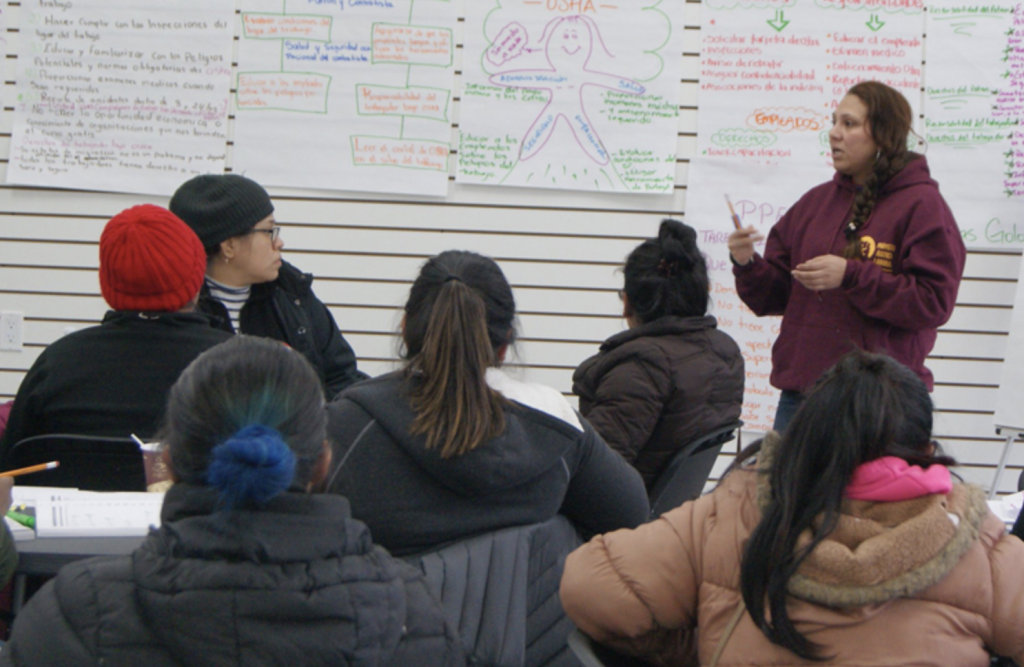
“One of our members, Patricia, from Mexico, fought to get into the construction industry. She initially came and took an OSHA (Occupational Safety and Health Administration) 30-hour health and safety training with us, and became fascinated by the rights, health and safety issues that exist in the industry, and how she as a woman and as a worker and a human being can be an agent of change. In less than a year, she has gone from laborer to safety supervisor.
Patricia was able to bring bathrooms for women on job sites and have deeper conversations about respect for women on the job. She is more conscious about what safety really means for everybody, not only while we’re working.”
While workers themselves have a transformative role to play, everyone has responsibilities for ensuring safety and wellbeing. As Ligia puts it: “Changing the culture of safety takes everybody: developers, contractors, subcontractors, managers, supervisors. I think one of the biggest challenges is how everybody in this chain understands what safety looks like, and that safety is a shared responsibility: across the board, and across every single actor in that specific industry.”
She also talks about how WJP members experience and respond to the impacts of climate change.
“Most of our members live in Coney Island, Bensonhurst, and Sunset Park, at the edge of the water. Climate change is very personal for many workers. A lot of our members see themselves as first responders. When another Sandy happens, they know that they will be the first ones on the ground — exposed to dirty, unsafe, and deadly conditions — to build back our cities.”